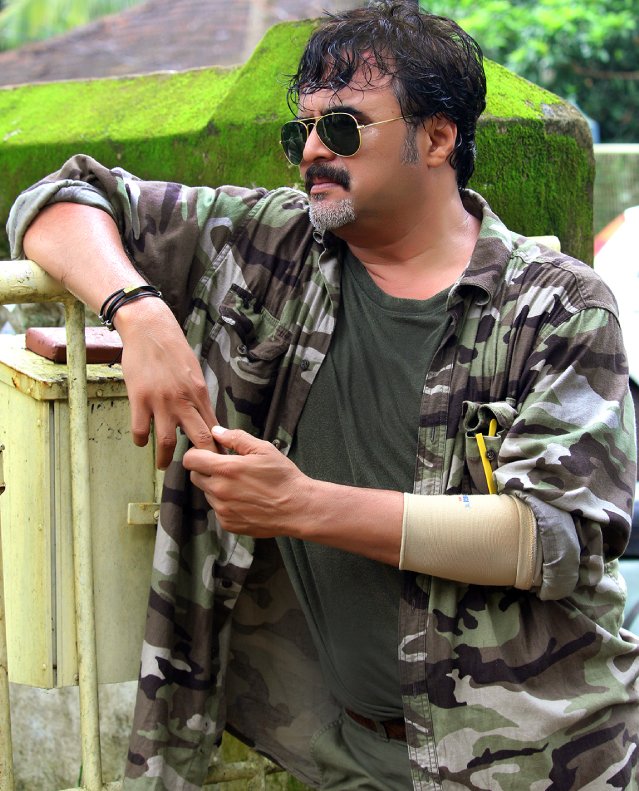
His name appears at art exhibitions across Gujarat and India, and on the covers of many
photo-books and coffee-table volumes. Yet public language often falls short of the presence
behind those images — a photographer who makes scenes and faces speak through his lens, a
quiet master of the craft, a poet with a camera: Sanjay Vaidya.
Since 2007, his distinctive photo-books have been regularly published, especially his
portrait series on celebrated personalities. These books often feel less like collections of
photographs and more like intimate visual memoirs of the figures they capture. They have
earned him wide recognition and a place among India’s leading photographers.
Among the many legendary figures he has photographed are Gujarati literary giants like
Suresh Dalal, Tarak Mehta, Chandrakant Bakshi, and Gunvant Shah; masters of Indian
classical music including Pandit Bhimsen Joshi, Pandit Jasraj, Pandit Shivkumar Sharma,
Ustad Amjad Ali Khan, Begum Parveen Sultana, Pandit Hariparasad Chaurasia, Pandit
Rajan-Sajan Mishra, Ustad Zakir Hussain, and Grammy winner Pandit Vishwa Mohan
Bhatt; spiritual leaders such as Morari Bapu, Sri Sri Ravishankar, Pramukh
Swami Maharaj, and Rameshbhai Oza; and legendary film personalities like
Gulzar, Amitabh Bachchan, Aishwarya Rai Bachchan, Asha Bhonsle, Manoj Bajpayee,
Tabu, and Irrfan Khan.
Based in Ahmedabad, Sanjay teaches photography, conducts workshops, and explores creative
visual storytelling. His deep love for language and literature has drawn him toward literary
publishing, Sanskrit folk-music fusions, and creating rich documentaries on renowned
Gujarati authors. When asked for an interview, he responded with his characteristic modesty:
“I’m not very good at speaking,” and then this conversation began.
I. The Genesis of a Calling Beginnings & Profession
Q: Sanjay, where did this unusual interest in photography come from, and how did it
develop?
A: Photography has always been my passion, my hobby. I never imagined I would take
it up professionally. I have always loved nature and taken interest in everything
happening around me. Even as a young person, I used to feel that although I was
watching events unfold, I was not fully inside them. Somewhere, I wanted to become
involved. I think there was always something within me that wanted to see a moment
and freeze it. The moment I first held a camera and clicked the first few
photographs, I knew this was what I wanted to do. Whether I went to Assam or
anywhere else, I loved the process of seeing something, photographing it, and
bringing it back. That entire experience gave me immense joy. That is how I entered
this field.
Q: Photography as a hobby is one thing, but wasn’t it risky to take it up as a
profession? How does the economics of it work for a new photographer?
A: It certainly felt risky. In my family, my grandmother used to say, “How long will
you keep doing these photos? If someone comes with a marriage proposal and asks what
the boy does, what will we say — that he takes pictures?” In those days, photography
was often considered a somewhat lowly occupation. I was never a brilliant student,
and my academic record was pretty average. So I never had the ambition of becoming a
doctor or an engineer. I first took photography as a hobby, and then, almost without
realizing it, it became my profession.
In those days the economics of photography were very different. Compared to
painting, photography was considered a lower art form — in fact, many people did not
even regard it as art. It was seen as something technical rather than aesthetic.
Later, with the arrival of digital technology, the medium changed dramatically. Even
before that, through film photography and later television and cinema, especially
from the 1990s onward, photography gained greater recognition. Its economic value
changed as well. Today, one cannot imagine the kind of money photographers can make.
In India, many photographers now earn more than cameramen in films or television
serials.
"Every photograph is born in the eighth of a second."
—
Salman Rushdie
II. The Art of the Instant Moments, Painting & Light
Q: You are also a painter. What is the difference between an image made by a
photographer and one made by a painter?
A: Because I am a photographer, I should not say that photography is greater. But if
I speak honestly, I have always felt that when you paint, you have the freedom to
alter the work. If something is not right, you can change the shape, the form, the
color. That freedom exists in painting. In photography, there is no such liberty.
You must capture a single moment and hold it. If you miss it, it is gone. So you
must be alert, you must sense the moment before it arrives, and then click at the
right instant. There is a beautiful line Salman Rushdie once said: “Every photograph
is born in the eighth of a second.” That is exactly how I see it. In that tiny
fraction of time, you must prove how powerful your photograph can be.
Q: You began with nature photography, but today you are known as a portrait
photographer. How did that journey happen?
A: At the beginning, there were not many options. There was no major distinction
between wildlife, nature, candid, or portrait photography in the way we think of it
now. And in Gujarat, or even Ahmedabad, there were no institutions teaching
photography. I learned through trial and error. First one had to buy a camera, then
film rolls, then take pictures, and then show them to someone experienced — and if
that person was in a good mood, perhaps they would teach you a thing or two. The
main rule was simple: never repeat the mistake you had already made.
Landscapes came more easily because they offered variety — different trees,
different lakes, different scenes. My turn toward faces happened almost
unconsciously. I do not think I deliberately decided to move toward portraiture. But
as I continued, I realized that human faces offer the same variety that landscapes
do. I have been photographing for 40 years, and I have still not seen two faces that
are the same. Even twins do not appear identical to me. Moving through so many faces
is an extraordinary experience.
Every face carries a story, a hidden signature of its own. Finding that story is a
delight. There is risk in it, but there is also excitement and joy. If you can bring
out the story behind a person’s face, then you have succeeded. Otherwise, no matter
how attractive the photograph may be, it remains only surface-deep. A portrait must
reveal something of the person. That is why I prefer to meet the subject beforehand.
Even if I am to shoot someone the next day, I like to spend two or three hours with
them first — just ordinary conversation, nothing formal. During that time, I observe
the face carefully. I watch the person, their likes and dislikes, and I try to
understand which side of the face speaks more honestly. Eyes, I have found, are
remarkably truthful. And since our work is done with a lens, we too must be honest.
Q: How do you choose the people you photograph for portraits?
A: Now I have enough freedom to choose. Earlier I was a commercial photographer, so
I photographed whoever paid. Today I can say no. I can tell someone that I do not
want to photograph them, or that I do not feel comfortable doing it. I can
photograph an antihero, someone unusual or eccentric, but not a villain. If I feel
that a person is fundamentally inauthentic, I cannot photograph them. When a face is
wearing a mask, that artificiality is visible to me, and I cannot remove that mask
through photography. That troubles me. So I prefer not to photograph such people. Of
course, this is only my personal way of looking at things. Someone I consider
inauthentic may not be so in another person’s eyes.
"Every face carries a story, a hidden signature of its
own. Finding that story is a delight."
III. Encounters & Epiphanies Morari Bapu & Danger on Amarnath
Q: You have made many portrait books. Which personalities have been most interesting
to work with? Any memories that stand out?
A: I have been fortunate to spend time with many people from different fields, and
often not just for a few hours but for two or three days at a stretch. It is
difficult to single out one experience above all others. But one memory that remains
vivid is from the time I was working on a photo book of Morari Bapu.
I had gone to Jagannath Puri to photograph him. The atmosphere there was entirely
different, the culture was different, and nobody knew me. Around Bapu there were so
many people that I could not get near him. I assumed he recognized me and would call
me when he saw me, but reaching him required crossing many barriers. So I waited for
two days. On the third day, I finally gate-crashed my way in.
When he saw me, he called me over and asked, “Son, how did you get here?” I told
him, “Bapu, I have come to photograph you. I am making a photo book, and I want to
stay with you from morning till evening.” At that moment he was surrounded by fifty
or sixty people, and they all chided me for not touching his feet, for speaking to
him so casually. But I knew him from childhood. I had no sense that formal gestures
were necessary. He is older than me, of course, and I do offer respect to elders.
That is part of our culture. But I do not feel that because someone is a spiritual
leader, I must suddenly prostrate myself. I may be wrong, but none of the spiritual
leaders I have photographed ever objected to this. Whether it was Morari Bapu,
Rameshbhai Oza, or Sri Sri Ravishankar, none of them ever asked why I had not bowed
at their feet.
The next day, when I was called again at four o’clock, it was drizzling lightly.
When I went up to Bapu’s room, the entire courtyard and staircase were crowded.
People there were criticizing me, saying that someone like me should not trouble a
saint or disturb his practice. For a moment I even wondered whether I was doing
something wrong. But the moment I met him, that doubt vanished. He simply told me,
“I am doing my work, you do yours.” Then he carried on with his rituals — offering
water to the sun, watering the tulsi plant — and allowed me to photograph everything
beautifully. Within twenty-five minutes I had taken around one hundred and fifty
photographs. He offered no resistance at all.
Q: You must have faced difficult situations too.
A: Yes, certainly. I do not remember the exact year, but I think it was 1998 when
there was a landslide in Amarnath and four or five thousand people died. I was in
Mumbai at the time, and I was assigned to go there and take photographs. Harkishan
Mehta, the chief editor called me — a person I respect greatly — and told me that I
had to go because everyone else was refusing. They felt it was too difficult. He
asked whether I would go. I was young, so I was excited. If everyone else was saying
no, that made it more interesting to me. So I went.
From Mumbai I went to Ahmedabad, then to Delhi, then to Srinagar. From Srinagar, the
army took us by helicopter to Sheshnag. There were a few foreign journalists there
too, but since I was Indian, I was given the first opportunity to travel by
helicopter. I was delighted, thinking what a great chance it was to shoot such an
important story. But when I landed and saw the scene around me, it was horrifying. I
was trembling while taking the photographs — not from the cold, but from the terror
of what I was seeing.
On the way back, the helicopter had the pilot, one other person, and me. Then they
loaded bodies into it. Around twenty bodies were packed in, one on top of another. I
had to stand against them as the helicopter lifted off, and then take aerial shots
from the window. Even now, when I recall those moments, I feel a shudder inside. To
have twenty dead bodies around you, to feel someone’s hand brush your foot, and
still remain detached and photograph the scene as a neutral observer — that is not
easy. You cannot think about whose relative it is, or whether their family will
receive them. You can only do your work. Those three or four days remain
unforgettable.
"To have twenty dead bodies around you, and still remain
detached and photograph the scene as a neutral observer — that is not easy."
IV. Philosophy of Light Ego, Science & Digital Age
Q: Photography is both an art and a science. How do you see it?
A: I was an average student, and science never really stayed with me. So I have no
choice but to see photography as an art. And it is a wonderful art. Through it I
have gained a great deal — socially, financially, and perhaps most importantly, in
terms of personal growth. Photography has taught me to work with detachment, like a
lotus. It has taught me to remain what I am.
Earlier, when I came back with a beautiful sunrise, sunset, or landscape photograph,
I would feel a certain pride — that I had produced something exceptional, that I
possessed great artistic ability. But later I realized that anyone can take a
beautiful sunrise or sunset photograph. There is no great feat in that. My fortune
lies in having been given the opportunity to be there. I have gone to Assam, to the
Himalayas, places many people cannot reach.
The photographs I bring back are only a medium. In that sense, I am just a
messenger, and a messenger has no ego about carrying a letter. As a photographer, I
am simply a medium. The sunrise and the sunset are magnificent in themselves. That
realization strengthened the viewer within me. Whatever ego may once have entered me
gradually disappeared. Even today, when my students — boys and girls of sixteen or
seventeen — bring me their photographs, I feel the same curiosity and wonder they
feel. That sense of amazement has never left me.
Q: Has technology made photography so easy that anyone can now take a good picture?
A: Yes, and that is very true. In today’s digital age, one almost has to work hard
to make a bad photograph. Cameras are so sophisticated that pictures often come out
well by default. Technology changed the whole medium. Earlier there was film, and
with film came different speeds, loading, shooting, developing, and finally holding
the printed image in your hand. All of that disappeared with digital technology.
The first change was that photography became cheaper. In 1989 or 1990, if you shot a
roll of thirty-six frames, by the time the prints came back you would easily have
spent seven or eight hundred rupees. For a student of photography, that was a lot of
money. Today you can see your photos immediately on a computer, so the process is
both easier and less expensive. New kinds of lenses also made the work simpler. Then
the internet arrived, and sending photographs became effortless. I can send you an
image in seconds.
So photography has become easier for photographers, but at the same time, proving
your quality has become much harder because competition is so intense. Today almost
anyone can take a good photo. Many people can post attractive pictures on Facebook
and Instagram and many other platforms. The monopoly of the “good photographer” no
longer exists. You must prove yourself every day.
Q: Has the progress of science led to the slow death of art?
A: No, I do not agree with that. In the end, it is like the Gujarati saying: “If
there is water in the well, it will reach the trough.” In other words, if the
original photograph is strong, then editing can only support it. If the base image
is weak, nothing can really save it. Photoshop and other editing tools are only
accessories — like ornaments, like makeup.
A bride may be beautifully dressed, heavily made up, and adorned with jewelry, but
none of that matters more than her own natural beauty. If she is beautiful to begin
with, she will still look lovely even without makeup. A face without makeup can
still be a beautiful face.
"A messenger has no ego about carrying a letter. As a
photographer, I am simply a medium."
V. Passing the Torch Teaching, Music & Creative Pursuits
Q: You are involved in teaching photography and conducting workshops. How far can
this art actually be taught?
A: It is much better now. In our time, there were no institutions that taught
photography. Today many colleges and institutes do. And with new equipment, teaching
has also become easier. But I have always felt that photography can never truly be
learned in closed rooms or classrooms alone. I teach in colleges, but after the
first three or four introductory classes, I usually take the students outdoors. We
go to places like Pondicherry, Assam, and the Himalayas and conduct workshops there.
My personal belief is that students should be allowed to make many mistakes. I tell
them to make plenty of mistakes and learn from them. Landscape photography is one
field where mistakes show up immediately. The mistake is not in the landscape
itself, but in how you capture it. If you do not do it correctly, the error becomes
visible. That is how one learns — by seeing one’s mistakes clearly. I believe every
person has a photographer within. The real question is how much opportunity you give
that inner photographer.
Q: Sanjay, apart from photography, what other interests do you have?
A: I love reading. For me, reading is like breathing. I simply must read. I also
love good music. Without reading and music, I cannot manage. I am passionately fond
of both, and perhaps that is also why I am not a very good writer or musician —
because I am a full-time lover of books and music. I read everything: fiction,
non-fiction, essays, letters, poetry — all of it. And I read in all languages.
In music, I prefer Indian classical music, though I have no objection to a rock
band. I enjoy rock too, as much as I can understand it. My son is involved in rock
and jazz bands, and I enjoy it when he explains things to me, teaches me, and shows
me how it works. I appreciate every form of music, but Indian classical music
appeals to me a little more because I understand it better.
Q: You have photographed many of our great musicians. What was that experience like?
A: Yes, I have photographed nearly all the major Indian classical musicians. But to
be honest, I always felt a certain gap in myself because I did not know music. I
tried to make up for that by photographing the artists at their very best — by
capturing their finest moments.
In a way, I wanted to compensate for what I lacked by doing my work as carefully and
beautifully as possible. Since I do not know music, I feel I must do something that
makes the musician remember me. So when someone like Pandit Shivkumar Sharma or
Ustad Zakir Hussain calls me and says, “The photograph turned out very well — please
give it to us,” it feels to me as though I have learned a beautiful raga.
Q: Sanjay, if you were not a celebrated photographer today, what do you think you
would have become?
A: I think I would have been a teacher. That is what feel now, because for the last
many years I have already been in teaching. Being a teacher, being a guide —
especially now, as I approach 60 — feels so satisfying that I believe if I were not
taking photographs, I would certainly have become a teacher.
I love being with students and their freshness, their energy. One of our senior
faculty members, Christopher Benninger — an American architect who lived in India
for many years — once taught us something beautiful: “The greatest gift you can give
your student is to teach him to always be a student.” That line has stayed with me.
It feels deeply inspiring and refreshing. Even when I go to teach, I do not return
tired after two or three hours. I come back recharged, having learned two new things
myself. And that is what keeps me moving forward.
"The greatest gift you can give your student is to
teach him to always be a student."
—
Christopher Benninger